
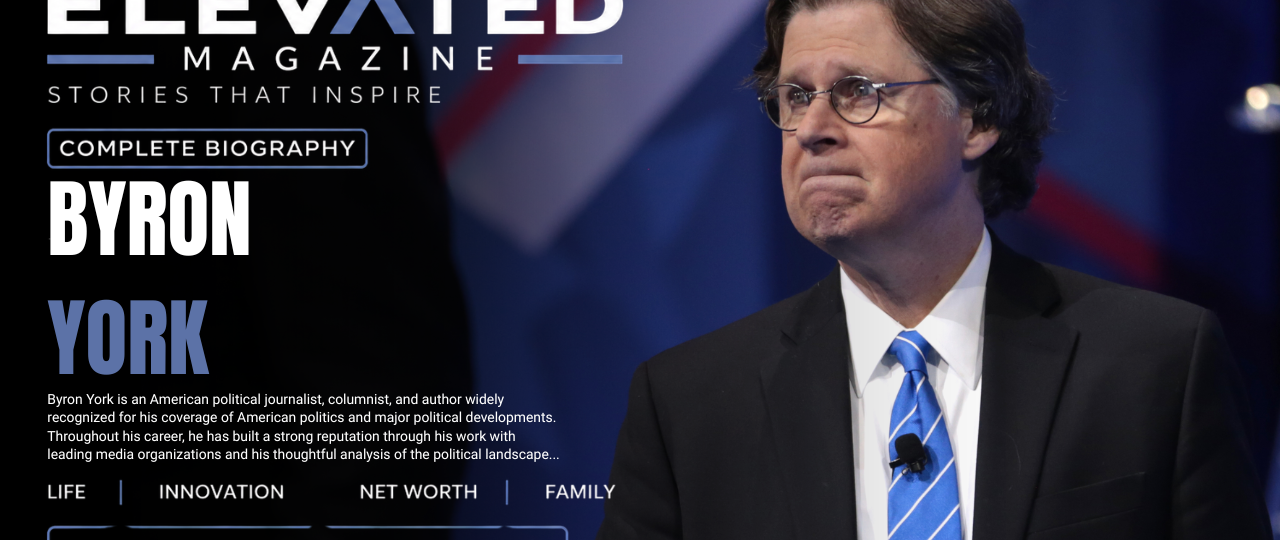

Byron York has spent decades reporting on American politics, covering presidential administrations, congressional battles, election campaigns, and the people shaping Washington. As chief political correspondent for The Washington Examiner and a contributor to Fox News, he has built a recognizable career in conservative political journalism. That long professional record naturally raises a question among readers: what is Byron York’s net worth?
The difficulty is that York’s career is much easier to document than his finances. His reporting positions, published books, and television appearances are publicly visible, but there is no reliably established public accounting of his personal assets, investments, debts, or total wealth. Online estimates may suggest a specific figure, yet without transparent evidence, those numbers should not be treated as confirmed.
York’s financial story is best understood through the work he has done over the years: broadcast news, political reporting, newspaper columns, television commentary, and book publishing. These are plausible professional income sources, but they do not reveal his exact earnings. His biography also offers a useful look at how a political journalist builds a career in an industry where reputation, access, and the ability to explain fast-moving events matter.
Byron York Net Worth: What Is His Estimated Wealth?
Byron York’s exact net worth has not been publicly verified through reliable financial disclosures. There is no widely accepted figure supported by a detailed accounting of his assets and liabilities. Websites that publish a precise total without explaining their methodology should therefore be approached with caution.
York has worked in national journalism for many years, including at The Washington Examiner, National Review, The American Spectator, and CNN Headline News. He has also written books and appeared as a political commentator on television. His current professional biography identifies him as chief political correspondent for The Washington Examiner and a Fox News contributor.
Those roles establish a substantial professional career, but they do not tell us how much he has accumulated. A journalist’s wealth can depend on salary, freelance or syndicated writing, book royalties, speaking engagements, investments, property, taxes, and personal spending. Most of those details are private unless disclosed by the individual or documented in credible reporting.
Why there is no confirmed net-worth figure
Unlike public company executives whose compensation may be disclosed in regulatory filings, journalists generally do not have to publish a personal balance sheet. York’s employer biographies describe his work and credentials, not his private finances.
That means there is no sound basis for presenting a specific dollar amount as fact. Even if an estimate appears across multiple biography websites, the sites may be repeating one another rather than independently verifying the claim.
A responsible assessment separates what is known from what remains uncertain:
- Net worth: Not publicly confirmed.
- Main professional field: Political journalism and commentary.
- Current roles: Chief political correspondent at The Washington Examiner and Fox News contributor.
- Other documented work: Newspaper and magazine writing, broadcast journalism, and book authorship.
- Likely professional income categories: Journalism compensation, commentary work, and book royalties, although exact amounts are not public.
- Investments and personal assets: No comprehensive, verified public accounting identified.
The absence of a confirmed figure does not mean York has little wealth. It means his financial position cannot responsibly be reduced to a number without stronger evidence.
Who Is Byron York?
Byron York biography, education, and professional background
Byron York is an American political journalist, columnist, author, and television commentator known for his conservative perspective and reporting on national politics. His professional identity is closely tied to Washington, where he has covered presidential administrations, congressional activity, and political campaigns.
The Washington Examiner identifies him as its chief political correspondent and notes that he has covered the last five presidential administrations, as well as Congress and election campaigns since 2000. His work has also appeared in publications including The Wall Street Journal, The Atlantic, and Foreign Affairs.
York’s career has developed across several parts of the news business. He has worked behind the scenes in broadcast news, reported for political publications, written books, and appeared on television to analyze major developments. That combination has given him a broader professional footprint than a columnist whose work appears in only one outlet.
His writing often examines political strategy, presidential power, party organization, and the disputes that define American elections. Readers may agree or disagree with his conclusions, but his career is rooted in a recognizable specialty: explaining political conflicts from a conservative reporting and commentary perspective.
Byron York Biography Table
| Detail | Information |
|---|---|
| Full name | Byron York |
| Nationality | American |
| Birthplace | Birmingham, Alabama, according to biographical profiles |
| Date of birth | December 5, 1955, widely listed; not independently confirmed here through a primary source |
| Age | 70 as of October 21, 2026, if the widely reported birth date is accurate |
| Profession | Journalist, columnist, author, political commentator |
| Current position | Chief political correspondent, The Washington Examiner |
| Television role | Fox News contributor |
| Education | University of Alabama; University of Chicago |
| Former employers | CNN Headline News, The American Spectator, National Review |
| Books | The Vast Left Wing Conspiracy; Obsession |
| Marital status | Reported as married; further personal details are limited |
| Children | Not reliably confirmed in the sources reviewed |
| Net worth | Not publicly confirmed |
The Washington Examiner and Fox News provide the strongest straightforward confirmation of York’s current professional roles. His education is also consistently identified in his professional biographies.
The distinction between verified career information and less certain personal details is worth maintaining. Online biographies sometimes list personal facts without showing where they originated. Where a reliable primary source is not available, a cautious description is preferable to an unsupported claim.
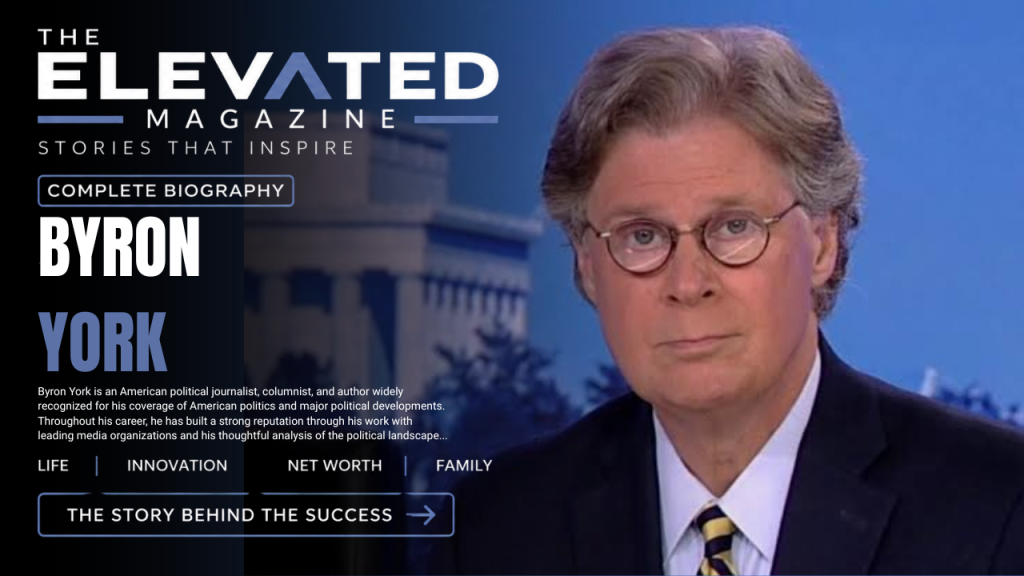
Early Life and Education
York is associated with Birmingham, Alabama, where his father, Tom York, was a longtime television personality. Biographical profiles describe York as having grown up in Alabama before pursuing higher education.
He earned a bachelor’s degree from the University of Alabama and later completed a master’s degree at the University of Chicago. Those credentials are listed in his employer biography and syndicated-columnist profile.
His educational path preceded a career that would take him into broadcast journalism and then political reporting. Unlike a journalist who enters the public eye through a viral appearance, York developed his reputation over years of reporting and writing.
The public record contains less detail about his childhood, personal motivations, and early family life than it does about his professional work. There is no need to fill those gaps with invented anecdotes. His documented education and career progression provide a sounder foundation for understanding how he entered political journalism.
How Byron York Started His Journalism Career
York’s early work included a production role at CNN Headline News. He later worked as an investigative reporter for The American Spectator, a magazine known for political reporting and conservative commentary. His career then included work for National Review, where he served as a White House correspondent, and a column for The Hill.
These roles represent different sides of political journalism. Television production involves selecting and organizing material for a broadcast; investigative reporting requires gathering evidence and developing a story; White House reporting places a journalist close to the daily activity of the presidency. A career spanning those functions can provide both newsroom experience and familiarity with political institutions.
York’s time at The American Spectator also placed him in the midst of the political controversies surrounding the Clinton administration. In a retrospective speech published by the magazine, York described how he began sending stories to the publication and gradually received more assignments. He later wrote about the magazine’s internal difficulties in a 2001 article for The Atlantic.
That early chapter illustrates something important about journalism: professional opportunities often develop through repeated reporting, editorial relationships, and a willingness to pursue a particular subject over time. York’s later national profile did not emerge from a single event. It grew through work across several publications and formats.
The Move to National Political Reporting
York joined The Washington Examiner in early 2009, becoming its chief political correspondent. His role has involved covering national campaigns, Congress, and successive presidential administrations. The publication continues to host his columns and identifies him as one of its principal political reporters.
The job placed York in a position to write about political developments as they unfolded. Washington reporting often requires more than summarizing speeches or public statements. Journalists must assess party strategy, track competing claims, interpret institutional procedures, and distinguish public messaging from the underlying political calculations.
York’s work is shaped by his conservative outlook, which is relevant to understanding both his readership and the context in which his commentary is received. Political journalism is not a single, uniform product: reporting, analysis, and opinion can overlap, but they are not identical. Readers benefit from recognizing the genre of a particular piece and evaluating its evidence and reasoning accordingly.
York’s regular publication schedule also helps explain why his name remains visible in searches. A journalist who publishes frequently on major political developments can attract attention well beyond the audience of a single article, particularly when those developments are nationally consequential.
Byron York at Fox News
Alongside his newspaper work, York is a Fox News contributor. The network’s profile identifies him in that role and features his appearances discussing current political events.
Television commentary differs from written reporting in several ways. A broadcast guest may have only a short period to explain a complicated issue, respond to other panelists, or interpret a new development. A newspaper column allows more space to set out evidence and develop an argument. Working across both formats can expand a journalist’s public recognition, although the financial terms of those arrangements are not necessarily public.
York’s television appearances provide an additional channel through which audiences encounter his analysis. They also create a potential source of professional compensation. Still, it would be inaccurate to infer a specific Fox News salary from his contributor status alone. The network does not publicly disclose an individual compensation figure in the profile cited here.
His work for both a publication and a television network reflects a common feature of contemporary political journalism: a reporter’s public presence may extend across articles, broadcasts, syndicated writing, and other media appearances.

Byron York’s Books and Their Role in His Career
York has published two notable books that help explain his interests as a political writer: The Vast Left Wing Conspiracy and Obsession. Both focus on major political conflicts, though they examine different periods and circumstances.
The Vast Left Wing Conspiracy
Published in 2005
York’s book examines liberal political activism surrounding the 2004 U.S. presidential election and the organizational networks involved in challenging President George W. Bush. The publisher describes it as an account of activists, political fundraising, advocacy groups, and campaign strategy.
The book placed York’s political reporting into a longer format. Instead of responding to a single day’s headline, he could develop an argument across a full-length work, using reporting to describe the groups, money, and strategies involved in an election cycle.
Its subject also reflects York’s established interests: the relationship between political organizations, media attention, fundraising, and electoral competition. The book’s perspective is distinctly conservative, and readers should understand it as political nonfiction written from that standpoint rather than as a neutral account without an editorial position.
From a financial perspective, publishing a book can generate advances and royalties. But the publisher’s listing does not disclose York’s contract, sales-based earnings, or total royalties. The book is evidence of an additional professional activity—not proof of a particular income figure.
Obsession: Inside the Washington Establishment’s Never-Ending War on Trump
Published by Regnery in 2020
This book focuses on the political and institutional conflict surrounding Donald Trump’s first presidency, including the Russia investigation and impeachment efforts. Its publisher describes York’s account as a narrative built around access to sources in Congress and the White House.
Obsession drew on the kind of political coverage that had become central to York’s work: the relationship between elected officials, investigators, party leadership, and the press. Its subject also demonstrates how his writing has followed the changing focus of national political debate.
The book is an important career credit because it shows York working beyond daily columns and television appearances. It does not, however, establish how much he earned from publication. Advances, royalty rates, sales, and other contractual details are generally private unless the author or publisher discloses them.
Do his books significantly affect his net worth?
They may contribute to his overall professional income, but there is no public basis for measuring their precise financial effect. A book’s retail price is not the author’s earnings per copy, and total sales cannot be translated into personal income without knowing the contract and relevant expenses.
The sound conclusion is that book publishing is one documented part of York’s career, while the amount it has added to his personal wealth remains unknown.
How Byron York May Earn His Income
York’s professional biography provides a reasonable framework for discussing potential income sources. It does not provide his tax returns, employment contracts, or a breakdown of annual earnings. The distinction is important: a documented role may be a source of compensation, but its exact value cannot be inferred from a title alone.
1. Newspaper and political reporting
His primary professional position is chief political correspondent at The Washington Examiner. A senior reporting role is ordinarily a paid position, but York’s individual salary has not been established by the public sources reviewed.
His long tenure and experience covering major political events indicate a sustained career, but they do not reveal his savings, pension arrangements, investments, or accumulated wealth.
2. Television commentary
York is also a Fox News contributor. Broadcast appearances may be compensated under arrangements that vary by network and contributor, but no verified personal payment figure is available in the cited profile.
It would be misleading to apply a generic estimate for television pundits to York as though it were his actual contract. Compensation can depend on the nature and frequency of appearances, employment status, exclusivity arrangements, and other factors that are not publicly documented here.
3. Syndicated columns
York provides conservative commentary through the Newspaper Enterprise Association, according to Andrews McMeel Syndication. Syndicated writing can extend a columnist’s audience beyond a single publication and may be another source of professional earnings.
The exact terms of his syndication arrangement, the number of subscribing outlets, and the resulting compensation are not publicly established in the source. It is therefore appropriate to identify syndication as part of his documented work, but not to assign it a specific annual value.
4. Book royalties
His two books establish that he has worked as a nonfiction author as well as a journalist. Publishers may pay an advance and royalties under a contract, but the details differ from book to book.
Without verified sales totals and contract terms, neither his initial advances nor any continuing royalties can be calculated reliably.
5. Speaking engagements and other professional work
Experienced journalists sometimes participate in conferences, university discussions, panels, or private events. Such activities can be paid or unpaid. There is not enough reliable information here to establish a specific pattern of paid speaking engagements for York, so this category should remain a possibility rather than a confirmed major income stream.
6. Investments and personal assets
York may hold ordinary financial assets, as many people do, but the available evidence does not provide a verified inventory of his investments, property, or liabilities. It would be speculation to claim that a particular portfolio or real-estate holding explains his net worth.
The broader point is simple: professional activity can help explain how someone earns a living, but it cannot substitute for a financial statement.

Byron York’s Career Timeline
| Period | Career milestone |
|---|---|
| Early career | Worked as a producer at CNN Headline News. |
| Later early career | Worked as an investigative reporter for The American Spectator. |
| 2001 | Wrote for The Atlantic about the difficulties surrounding his former publication. |
| 2005 | Published The Vast Left Wing Conspiracy. |
| Before 2009 | Worked as a White House correspondent for National Review and wrote for The Hill. |
| 2009 | Joined The Washington Examiner as chief political correspondent. |
| 2020 | Obsession was published by Regnery |
| 2026 | The Washington Examiner continues to publish his columns; its biography also identifies him as a Fox News contributor. |
This timeline shows a career that has moved between broadcast news, political magazines, national reporting, book publishing, and television commentary. Those different roles help explain his continuing visibility in political news, but none provides a verified total of his wealth.
Byron York’s Reporting Style and Political Perspective
York is known for conservative political commentary and reporting focused on Washington’s institutions, party strategy, presidential power, and the conflicts that drive national debate. His work combines the daily pace of political journalism with a viewpoint that is openly associated with conservative media.
That perspective is relevant when evaluating his work. A political correspondent may report facts, interpret their significance, and express an argument in the same article or broadcast. Readers should distinguish those functions and consider the evidence presented, especially when an issue is contested.
York’s professional profile emphasizes reporting and analysis rather than celebrity or lifestyle coverage. Andrews McMeel Syndication describes his column as reporting-based commentary that draws on Washington sources while attempting to explain developments beyond the political establishment.
His approach has also given him a consistent subject area. Elections, congressional disputes, investigations, and presidential controversies generate a steady stream of stories, and York has built much of his career around interpreting those events for readers who follow conservative politics.
This professional specialization helps explain why his work remains visible across different media. It does not, by itself, indicate whether he earns more or less than another journalist with a similar title.
Personal Life: What Is Publicly Known?
York’s public biography is primarily professional. Reliable sources identify his father as Tom York, a longtime television personality in Birmingham, Alabama, and confirm his education and career history.
Some biographical listings describe York as married, but detailed information about his spouse, children, and private family life is not consistently established in the strongest sources reviewed. It would be inappropriate to supply names or family details without adequate confirmation.
This relative lack of personal information is not unusual for a journalist. Unlike actors, reality-television personalities, or social-media creators, political reporters generally do not need to share their home lives to maintain a public career. Their visibility comes primarily from their work.
For a biography focused on net worth, personal details are relevant only where they help establish a reliable financial fact. In York’s case, there is no verified public disclosure of family assets, inheritance, or other private financial arrangements that would justify a more detailed account.

Why Are People Searching for Byron York’s Net Worth?
Several factors may explain the interest in York’s finances.
His long career in national media
York has worked in journalism for decades, covering presidential administrations and national political campaigns. Readers often want to know what a long career in a high-profile profession may have yielded financially. His professional record is documented, but his personal wealth is not.
His television appearances
Fox News gives York an additional platform beyond his newspaper columns. Television visibility can lead readers to wonder about a commentator’s salary, contract, or other sources of income. Those details, however, are not automatically public simply because someone appears on television.
His books and syndicated writing
York has published political nonfiction and contributed syndicated commentary. These activities broaden his professional work beyond one newsroom and naturally raise questions about royalties and additional compensation. The exact amounts remain undisclosed.
Conflicting figures on biography websites
Searches for journalists’ net worth often lead to sites that display a dollar figure without showing the underlying evidence. Some estimates may be copied from other websites, creating the appearance of agreement without independent verification.
That pattern is a reason to be cautious, not a reason to choose the most frequently repeated number. For York, a confirmed total is not available in the sources reviewed.
Byron York Net Worth: Confirmed Facts vs. Unverified Claims
| Subject | What the evidence supports |
|---|---|
| Current employer | The Washington Examiner identifies him as chief political correspondent. |
| Fox News role | Fox News identifies him as a contributor. |
| Education | His professional biographies list the University of Alabama and the University of Chicago. |
| Published books | The Vast Left Wing Conspiracy and Obsession are documented publications. |
| Syndicated commentary | Andrews McMeel Syndication lists his weekly conservative commentary. |
| Exact annual salary | Not publicly confirmed in the sources reviewed. |
| Exact book royalties | Not publicly confirmed. |
| Total investments and property | No comprehensive verified public accounting identified. |
| Exact net worth | Not publicly confirmed. |
The distinction between confirmed career details and unverified financial claims is central to a trustworthy profile. York’s professional history supports the conclusion that he has several established forms of journalistic work. It does not support a precise estimate of his personal wealth.
What Is Byron York Doing Now?
As of October 2026, the Washington Examiner continues to publish York’s columns and identifies him as chief political correspondent and a Fox News contributor. His recent work on the publication’s author page includes commentary on President Donald Trump, congressional politics, economic issues, and the approaching 2026 midterm elections.
His professional direction remains consistent with the work that has defined his career: analyzing political developments and writing about the people and institutions influencing American government.
The continuing publication of his work confirms that he remains professionally active. It does not reveal his current salary, the size of his savings, or his net worth. Those questions require financial evidence rather than assumptions based on activity or seniority.
Looking ahead, his established positions suggest that political reporting and commentary will remain central to his public career, provided those roles continue. Any prediction about a new book, contract, or financial milestone would require a confirmed announcement.
Frequently Asked Questions
1. What is Byron York’s net worth in 2026?
Byron York’s net worth has not been established through a reliable, publicly verified financial disclosure. Although some websites may publish estimates, the available evidence does not support treating a specific dollar figure as confirmed.
2. How does Byron York make his money?
York’s documented professional work includes political journalism, television commentary, syndicated columns, and book authorship. These activities may generate income, but his individual salary, royalties, and other earnings have not been publicly established.
3. How much does Byron York earn at Fox News?
His exact Fox News compensation is not publicly confirmed in the sources reviewed. His role as a contributor is documented, but that title alone does not reveal his contract terms or annual earnings.
4. Is Byron York still working for The Washington Examiner?
Yes. As of October 2026, the publication identifies him as its chief political correspondent and continues to publish his columns.
5. What books has Byron York written?
Two notable books are The Vast Left Wing Conspiracy, published in 2005, and Obsession: Inside the Washington Establishment’s Never-Ending War on Trump, published in 2020. Both examine political conflicts from York’s conservative perspective.
6. How old is Byron York?
A commonly listed birth date is December 5, 1955. If that date is accurate, York is 70 years old as of October 21, 2026. Because a strong primary-source confirmation of his birth date was not identified in the sources reviewed, the age should be treated as based on widely reported biographical information rather than definitive confirmation.
7. Where did Byron York go to college?
York earned a bachelor’s degree from the University of Alabama and a master’s degree from the University of Chicago, according to his professional biography.
8. Is Byron York married?
Some biographical listings describe York as married, but reliable public information about his spouse and private family life is limited. Further details should not be presented as confirmed without stronger sourcing.
9. Does Byron York earn money from book royalties?
His published books make royalties or other publishing compensation possible, depending on the terms of his contracts. However, there is no verified public disclosure of his book advances, royalty rates, or total earnings from book sales.
10. Why is Byron York’s net worth difficult to verify?
Journalists generally do not have to disclose personal balance sheets or employment contracts. York’s career is well documented, but his assets, liabilities, investments, and compensation are not comprehensively public. Without those details, a precise net-worth estimate would be speculative.
Final Thoughts
Byron York has built a substantial career in American political journalism, moving from broadcast news and investigative reporting to national political coverage, syndicated commentary, television appearances, and book publishing. His work at The Washington Examiner and Fox News has kept him involved in the political debates that shape the country’s public conversation.
His financial position, however, remains a separate question. Byron York’s exact net worth is not publicly confirmed, and the available evidence does not justify assigning him a precise figure. His career offers a reasonable explanation of how he may earn income, but it cannot establish how much he owns or has accumulated over time.
For readers researching his finances, the most dependable approach is to distinguish documented professional achievements from unsupported estimates. His reporting career and published books are verifiable parts of his story; a definitive personal fortune is not.
That distinction provides a clearer picture of York—not simply as a name attached to a net-worth search, but as a political journalist whose career has spanned multiple eras of American media and national politics.